Wednesday, 1 June 2016

Sweatshop


This was my presentation about a TV-show called ”Sweatshop” a show that is about textile workers everywhere, but mostly in Cambodia since that is the place they are filming.  There may not be a direct connection with this and our syllabus, but considering the many times we have discussed how bad circumstances some people have to live with, I thought it would be an okay topic. Also, we have talked a lot about news and media. This show is made for Aftenposten by Joakim Kleven, and has been (and still is) discussed a lot in media. 6 million people in total on youtube and Aftenposten have watched the show (in 2015).


 In the program "Sweatshop" there are three youths from Norway; Anniken Jørgensen, Frida Ottesen and Ludvig Hambro Dybsand (season 1), Ludvig isn’t participating in season 2, but there are two Swedish girls who are (Lisa Tellbe and Sarah Tjulander) including Anniken and Frida from season 1. They are visiting Cambodia both in season one and two. In the first season, they want to see what it’s like to work in clothing factories in Cambodia and is more focused on giving them a living wage (177dollar) since the money they earned was the minimum wage (128dollar), but not enough to support their families, and in the second season they came more prepared and focused on getting rid of the short-term contracts and exchange them with log-term contracts as well as the living wage. Anniken and Frida had a meeting with the owners of Hennes&Mauritz in Oslo/Norway, and they told the girls that they could visit whichever factory they would like to visit whenever they wanted, but when they came down to Cambodia none of the guards would let them in because of the powerful people in Norway. It makes you think of how bad it is in there, and how dangerous it is. In addition to the fact that they sent 315 mails to different factories in Cambodia about paying them a visit let in in one of the factories (not even specific factories) and they did not get a single reply from any of them.

A regular daily payment is 3 dollars, which is approximately 25 NOK/crones. By these three dollars the workers is suppose to pay their rent, buy food for both themselves and their children if they have any. You notice in the show that with those three dollars you can’t get things from the supermarket but rather from the marked outside, which is dirty and probably is very pathogenic. Also, a jacket that one textile worker may have sown with her own hands, she would have to spend all of her annual earnings. I would like to show you a brief video that has been shared a lot, especially on facebook.

As an end to this presentation I would like to say the reason I chose this topic and how I feel about it myself. I have chosen this topic simply because it interests me, and I would like to inform others of the show, recommend the show to people who may not have heard about it, as well as I want to share the textile workers stories and messages. I can honestly admit that this show has made me cry more than once, because I had not heard about this, and it was definitely something I never considered or thought about. I think it is important to share these things, and based on whom I have talked to about this show, it seems like there are mostly teenagers who have heard about or watched this show. I can’t really describe my feelings towards this because it really moves me and I think it is awful to watch how they react to different questions, but we can’t stop buying clothes either because then they will not get paid.

Here is a link so you can watch one of the episodes of sweatshop.

Friday, 20 May 2016

This school year

This schoolyear and english course has been great. I have learned a lot about multiculturism, investment (which my topic in the last presentation) and other global challanges, social media and not at least have I learned the English language better. These topics are just examples of the many things we have learned this year. In my opinion blogs are easier to use than to hand in papers or deliver different files and documents in itslearning, so that is a positive feature in English course. Another positive thing is that we often work in groups and that is something I learn from. Something I probably would appreciate it if we had more visitors, I know we are getting visited by two people not these next few weeks, but we have not had many before now and I think it would have been interesting to listen to people who maybe work with the themes we have learned about in the textbook or someone who has experienced some of the challanges we have talked about. Besides this I think this year has been like it should be, focused on learning and getting through the book.

May the 24th

If i'm going to sum up how well I managed, I would say that I did okay. Not everything was exactly like the blueprint said, but I found most of the answers. I'm not very specific when I search in  Google, but specific enough to get answers. I rather use keywords instead of sentences because when you use sentences you often get mislead. People should defenetly test themselves, I found it quite interesting myself.

You can test yourself in this link.


Tuesday, 12 April 2016

4+ a) page 337

The Migrant

I could not remember anything about the voyage,
My country of origin, or if someone had paid for the passage:

Of such I had no recollection.

I was sure only that I had traveled;
Without doubt had been made welcome.

For a while I belived I were home,
Rooted and securelysettled,
Until it was broken to me
That in fact I were merely in transit
Bound for some other destination,
Committed to continue elsewhere.

This slow realisation sharpened,
I formed plans to postpone my departure
Not obsevring my movement en route to the exit.

Eventually facing the inescapable
I began reading travel brochures,
(Gaudy, competitive, plentiful)
Spent time considering the onward journey,
Studied a new language,
Stuffed her bosom with strange currency,
Nevertheless dreading the boarding announcements.

We watch her go through
The gate for Embarking PassengersnOnly,
Fearful and unutterably lonley,
Finger our own documents,
Shuffle forward in the queue.

Monday, 4 April 2016

Long Term Investment


Impact investing is investing that aims to generate specific beneficial social or environmental effects in addition to financial gain.

Today’s investors are facing a pattern shift; both in recognizing that old ways of doing business are no longer possible from a social and environmental perspective, but also in seeing the dissimilar competitive advantage of being a leader in sustainable business.  With a wave of millennials, the people who reach adulthood around the turn of the 21st century, demanding portfolios that reflect their values and trillions of dollars in wealth transferred over the next decade, the industry ecosystem is certain to change. Yet there is an urgent need to move investors to practice and to foster opportunities for action, as those who do not act and establish will soon be faced with competitors who do. Impact investing appeals largely to younger generations, such as millennials, who want to give back to society, so this trend is likely to expand as these investors gain more influence in the market. By impact investing, individuals actually state that they support the message and the mission of the company in which they are investing, and they have a share in the company's welfare. As more people realize the social and financial benefits of impact investing, more companies will engage in social responsibility. Since impact investing has gathered steam, with metrics and case studies developed, it is gaining vast demands to anyone seeking to invest with social impact, even in small to medium markets. The long-term future of impact investing is promising, but is still an open question, as Brian Trelstad said. Citing socially minded funds like London-based Bridges Ventures where he is a partner, Trelstad outlined quick changes in the still evolving yet fast-growing field of impact investing. Shaping the Future of Impact Investing initiative aims to accelerate the systemic evolution from the short-term investment mind-set to one that focuses on long-term investments and sustainable impact, resulting in an increase in the flow of capital into impact investmentsTen years from now, a social investment firm will be a recognized entity and social investment a recognizable asset class. Social administrators of every age will have innovated in the ways we handle different social issues and they will be admired for it. 
 

Here is a video were Mark Laudi talks about long term and short term investment.

these are my sources:  


Human Rights, Exam Task February the 7th


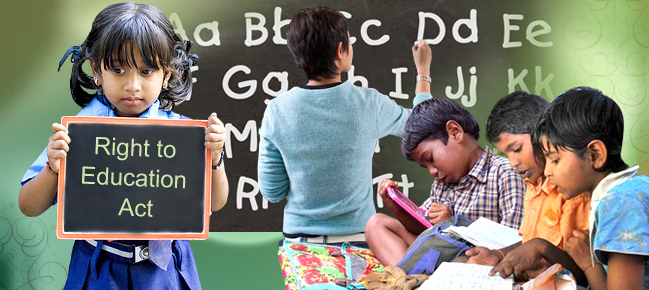
Human rights are rules and principles that describe certain standards of human behaviour and are important all around the world. The right to Education, human trafficking and the right about freedom of thought, conscience and religion are three human rights that are considered in this text.

Everyone should have the opportunity and right to education, simple as that. 
Education is the basis for your future career and your future in general. 
If we take Norway as an example, there is no doubt that people in my school underestimate
the power of education meanwhile the ones that need or want it the most, does not even have 
the chance. The message of the picture is that we shouuld be aware of the life of other 
children around world. Using children in the picture makes the impression worse,
you feel bad for the poor children. Even if the three boys in the picture have books, 
they do not have a desk which shows how much better the rich countries have it in school. 
The pitcure has an effective message because of the little girl with a sad facial expression, 
but also because of the litte boys who sits with a book in each of their laps and not on a 
schooldesk. In my opinion children affect our reaction in a deeper way than if there were 
grown ups in the picture. Also that the people in the picture are colored shows us that 
they are not from Norway or any other scandinavian country, which sets an emotional 
image of what it is like outside our own country. 


The importance of the human right about slavery and slave trades being prohibited is huge. It is both disrespectful and cruel towards other human beings. Admittedly slavery still happens even though there is a human right that says it should not, but the right is still important. How would you feel if you were enslaved in forced labor slavery or sex slavery?

The picture consists of four smaller pictures and describes how hurtful slavery can be, both physically and mentally. In my opinion this picture shows any worst-case scenario to express the seriousness of the issue. Any shape of slavery is wrong and the picture proves that. The picture also sends a message because of the negativity and depression of the pictures.

The dark colours in the picture, sends an effective message about how negative and awful the issue is. The four smaller pictures in the big picture consist of; one with a child held against its own will, one where the picture only shows some skin with stings in it which demonstrates the slavery of organ removal, one where there are two hands tied together as a symbol of labor slavery and lastly there are a picture of a woman who stands in the dark with an insecure expression on her face, which stands for sex slavery.

Lastly there is the human right; everyone has the right to freedom of thought, conscience and religion. We all should have the right to speak our mind both in action and silent. The fact that it is a human right is mostly important because it sets an image of how serious it actually is.

It seems the picture shows a protest about whether Edward Snowden did the right thing or not. Some of the text on the posters in the picture is written in Chinese so I cannot understand them very well, but I am sure it is relevant for the Edward Snowden case. The message in the picture would be that you should tell your mind and stand by it.

The picture sends such an effective message because of the fact that people in the picture actually speaks their mind in public about another man, who has gotten in trouble for sharing some things that he thought was the right thing to share.

In conclusion every human right has its importance and we should all cherish and follow them although different human rights are naturally more important in some countries than in others. Does the human rights make a difference in the world? Of course they make a difference if everyone obeyed them, but even though we have those rules and principles, some people often do the opposite of them.

Here you can read more about human rights. 

Tuesday, 1 March 2016

Tasks 1 and 3+ page 251

1) a) I think that the significance of the opening of the story is to share the children. The story is about a shelter home, which means that the childrens parents are not there and therefor i would say that these children are shared between the volunteers of the sheltel home.
b) A dilemma Carrie experiences in India is the problem of being understanded because of her twang and wrongly used grammar.
d+) The story is written in a 3rd persons point of view, which makes us watch the story from the "outside". This point of view also makes me belive that it is not that personal for the protagonist. The understandig I get from the text because of the third-persons point of view is that there are lots of opinions and thoughts that have not been told in the story.
e+) I would think that the significance of the last sentence is that the children need affection and comfort from the grown-ups. It is an open ending, which means that we have to reflect on whatever we think happens after. The boy seems scared and so does Carrie.
f+) You could say that the theme of the story is orphan children and volunteer worker. There would not even be a shelter home if there were not anyone who was willing to volunteer. 

3+) a) The kids surge forward like shoal of piranhas sets a negative image. It is well known that piranhas are dangerous fish and therefore we can get the picture that the job is exhausting or overwhelming.
b) She's battered by noise let us to belive that the children don't do anything but make noises and this is also a negative picture for the readers.
c) The children dissolve in a squirming puddle tells us that the children are like worms of some kind, just wiggeling and inside of the shelter home.
c) In this part of town, buildings are pressed thin by other buildings, rooms are compressed into corridors is a personification and it give us an impression of how crowded it is.
f) Sharp voices ricochet off the walls represent the loud noises as the writer mentioned before, besides this time she describes it as a loud echo.